
- Posts: 87
- Thank you received: 87
Colchester c1955 - the model by Paul Goldsmith
- Paul Goldsmith (paulg)
-
 Topic Author
- Offline
- Premium Member
-

Less
More
5 years 1 month ago - 4 years 11 months ago #266
by Paul Goldsmith (paulg)
Colchester C1955
I have wanted to build the layout for best part of 30 years, but work did not start until about ten years ago, albeit some of the locomotives and rolling stock date from previous layouts built 50 years ago and re-wheeled from EM to OO gauge. However, most of the work has been undertaken since retirement five years ago, but much is still to be done, including the Junction Signal Box, station canopies, the two signal gantries which were at the end of the Clacton bay platform, point rodding, ground signals, telegraph poles, etc etc – Oh and not forgetting building Colchester St Botolph’s Station over the storage sidings!
The first ten years of British Railways is my main interest and the rolling stock on the layout reflects this. However, research – which I enjoy as much as the modelling - soon showed how much the infrastructure changed at Colchester in that short ten-year period.
These changes included by 1953 increase from three to four carriage bodies for loco staff mess facilities, changes to overhead cables and ELPs by 1954, re-placement of the Clacton branch platform GER lower quadrant signal and new shed staff facilities by 1956, electrification of the Clacton branch by 1958 and major re-signalling by 1959.
I wanted to include the Colchester steam breakdown crane which was condemned in 1954, a kit of which was available from Dan Pinnock of D&S Models and a RTR model from Oxford Rail has been announced, so the infrastructure I’ve modelled roughly to scale, is the quarter mile of railway from the 51 ¾ MP at the end of the down platform to the 52MP by the pond, where the water softening plant sludge was deposited, including the entire loco depot as at c1955.
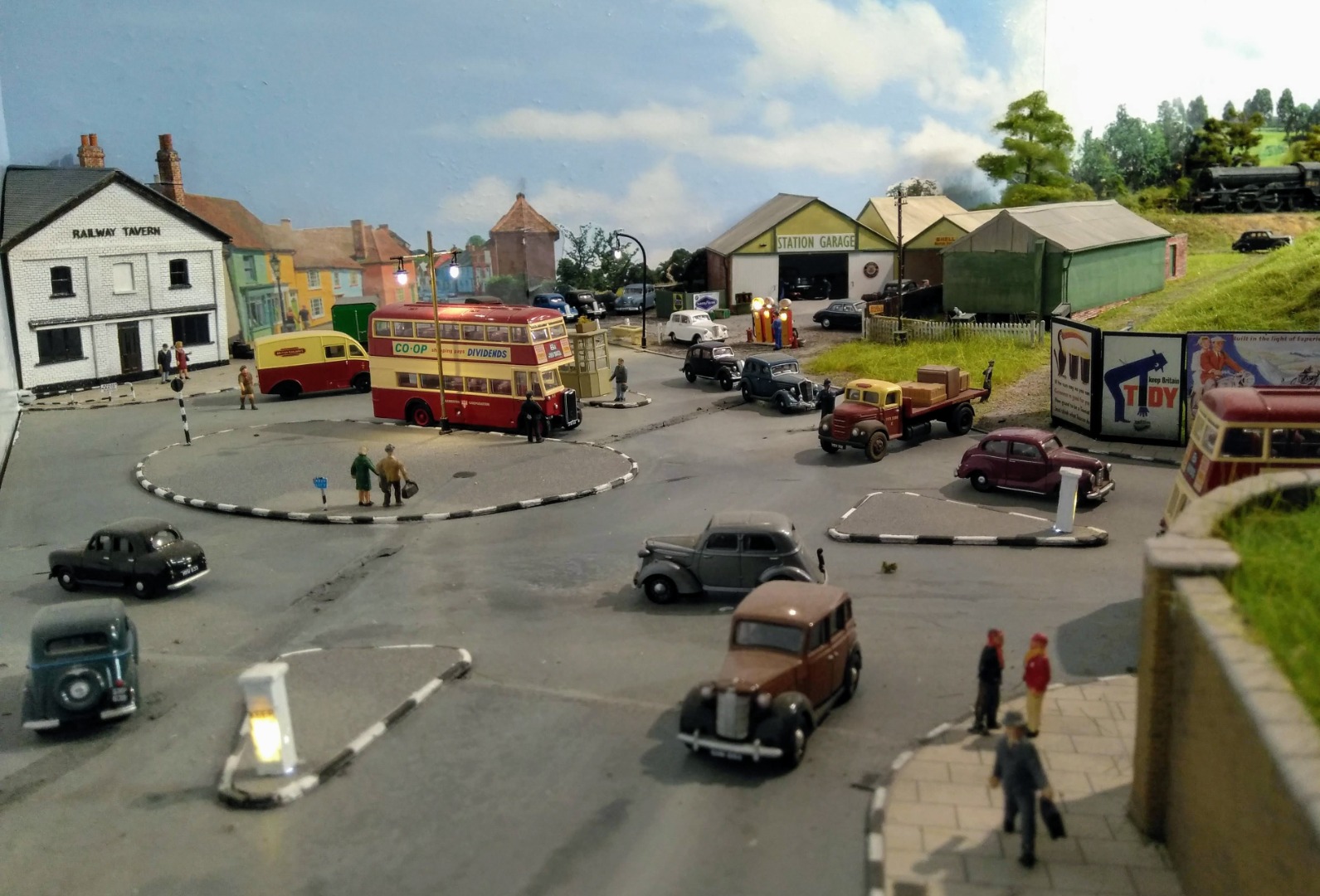
As with most things on this model of Colchester, this view has long passed into history.
The Eastern Counties Railway opened its station at Colchester on 29th March 1843 and in the earliest known photograph of the station, the Railway Tavern is in view, it became the Colchester Arms in 1963 and was demolished in 1972 to make way for a new roundabout. To the right of the public house is Station Garage and the “green” building is a covered water tank, which supplied water to the railway laundry, loco depot, and station.
Where the bus is parked was the original terminus of one leg of the tram system in Colchester, and the lighting column was an original tram overhead line pole.
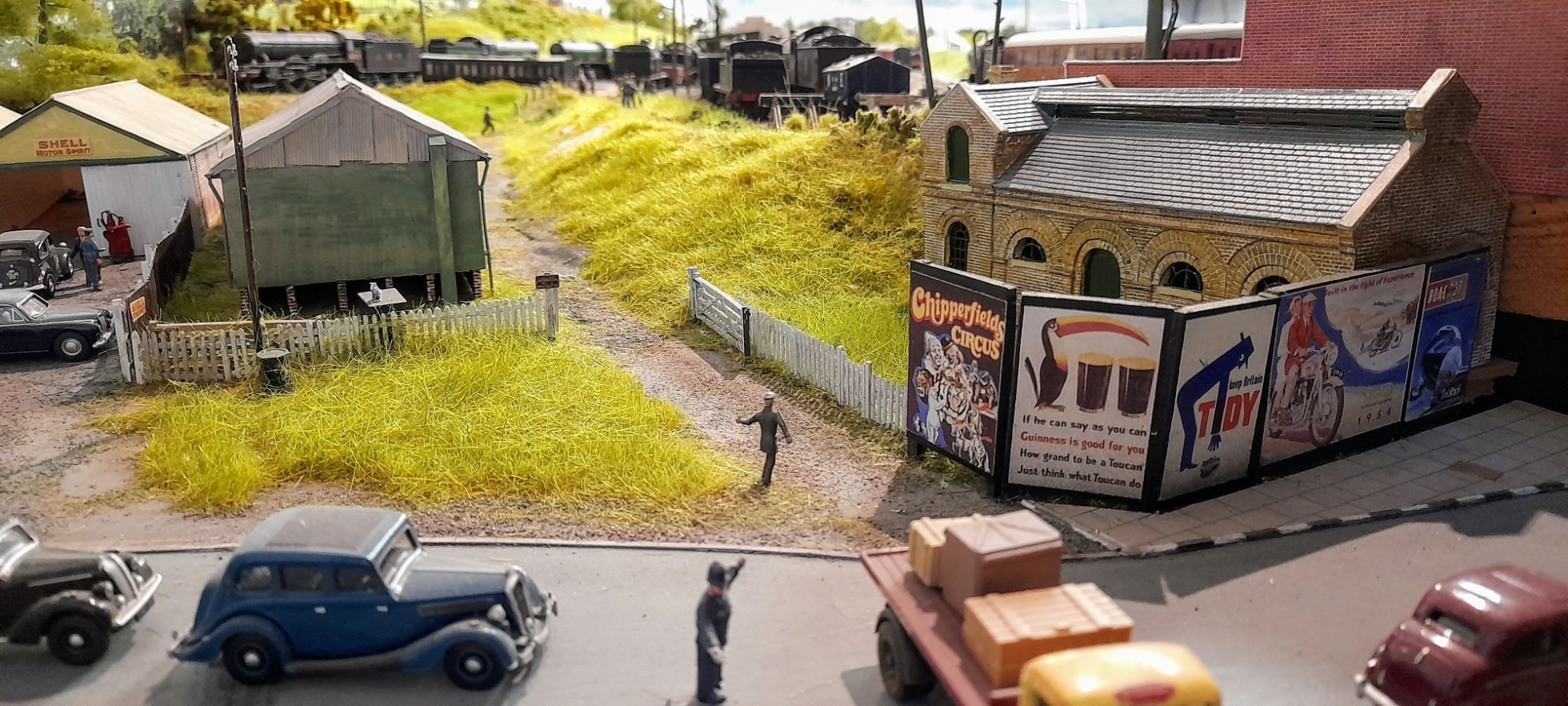
Next to the water tank was an access road to the loco depot and to the right the railway stable block, often miss-identified. A similar, but handed and large building still exists at Dereham Station on the Mid-Norfolk Railway. Mike Senatore Society Architectural Co-ordinator, has undertaken a full survey of the Dereham stable block and from this information, produced drawings of Colchester stable bock for me.
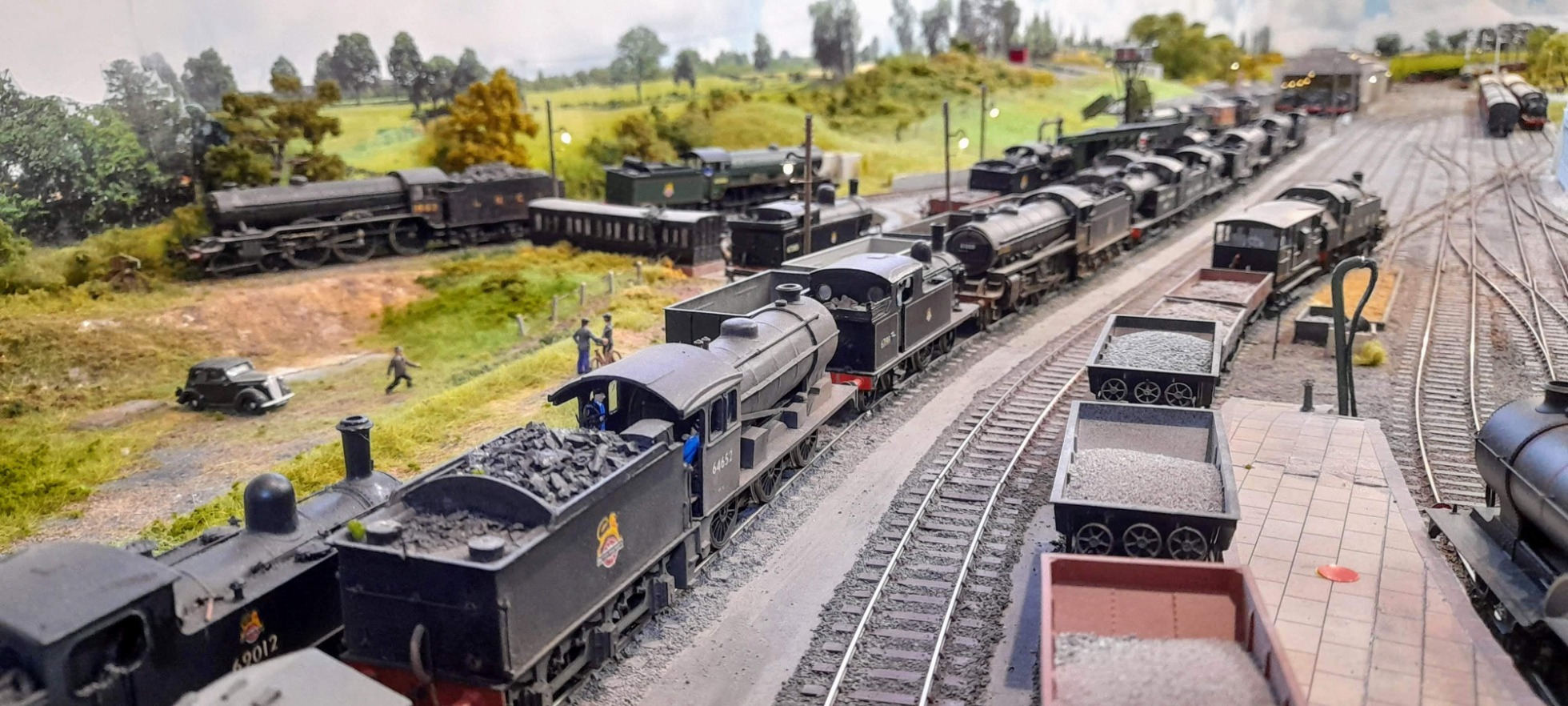
This view is taken from the station looking east towards Ipswich. On the extreme left is the loco spur off the turntable, where a loco was always maintained in steam for emergencies.
Locomotives in view, include Class J72 0-6-0T 69012 which was allocated to Ipswich in the early 1950s. Beyond Class J19 0-6-0 64652, which was allocated to Colchester from 1951 to 1959, is Class F5 2-4-2T 67199 and allocated to Lowestoft in 1955. It is push-pull fitted and the excuse for it being at Colchester is it is on-route from Stratford Works. I built this locomotive in the 1970s for another layout and only the push-pull fitted engines of this class were fully lined out by British Railways, so I cannot bring myself to remove the lining and renumber to a Colchester based loco.
On the right is a p-way train, hauled by Ivatt 2F 2-6-2T 41200 lettered LMS and allocated to Ipswich in the summers of 1949 and 1950 for Aldeburgh branch duties. The loco was brought all the way from North Wales to work the branch after an incident when the branch J15 failed, and the relief J15 set fire to the golf course. Unfortunately, on the train were several British Railways Board Directors on route to play golf! The loco was not liked by loco crews because of high coal bunker, which had to be hand coaled at Aldeburgh.
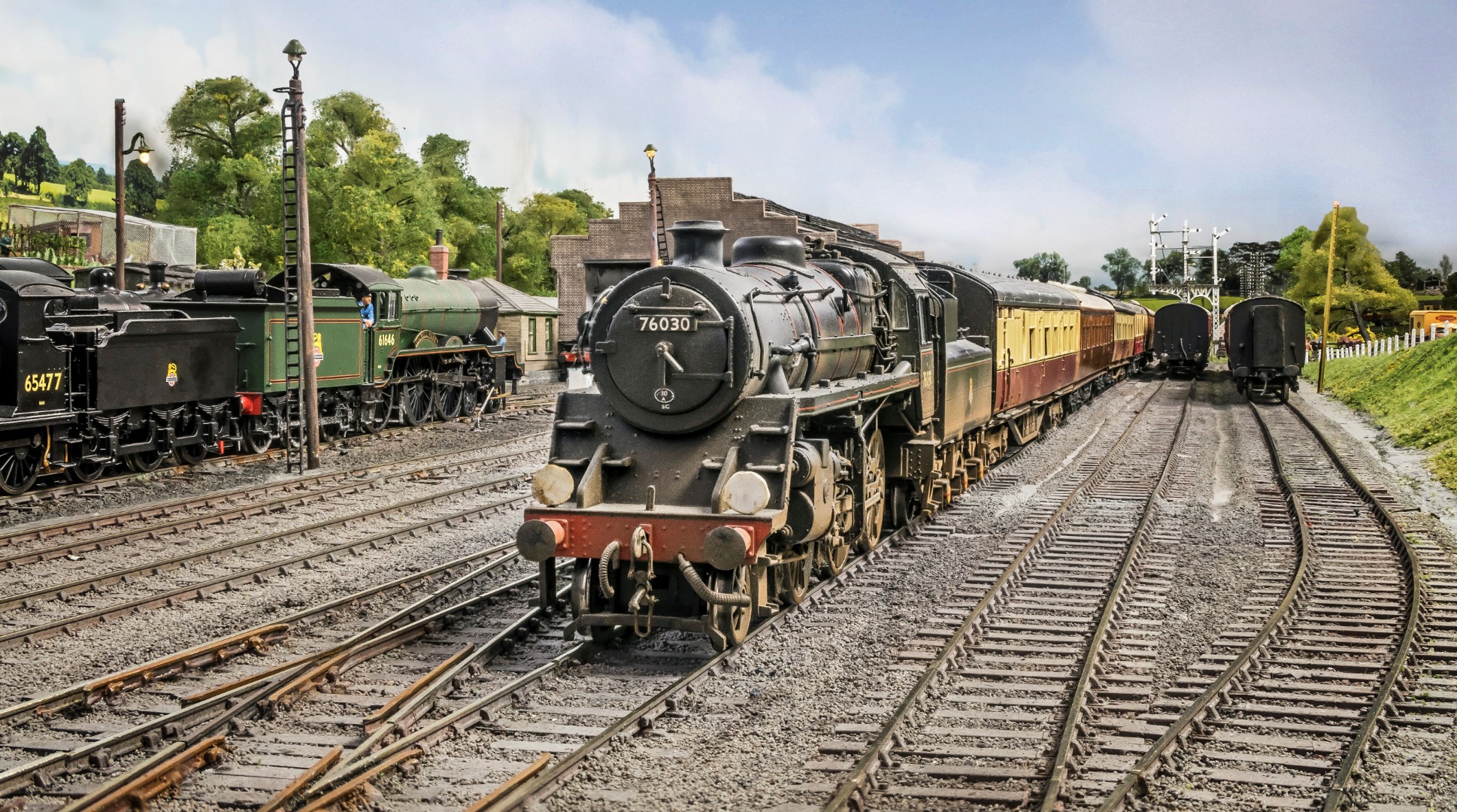
Stratford based BR 4MT 2-6-0 76030 arriving at the Clacton bay platform at Colchester, having worked a local service. On the right are the two carriage sidings, where frequently Brightlingsea, Cambridge, and Harwich local trains were held.
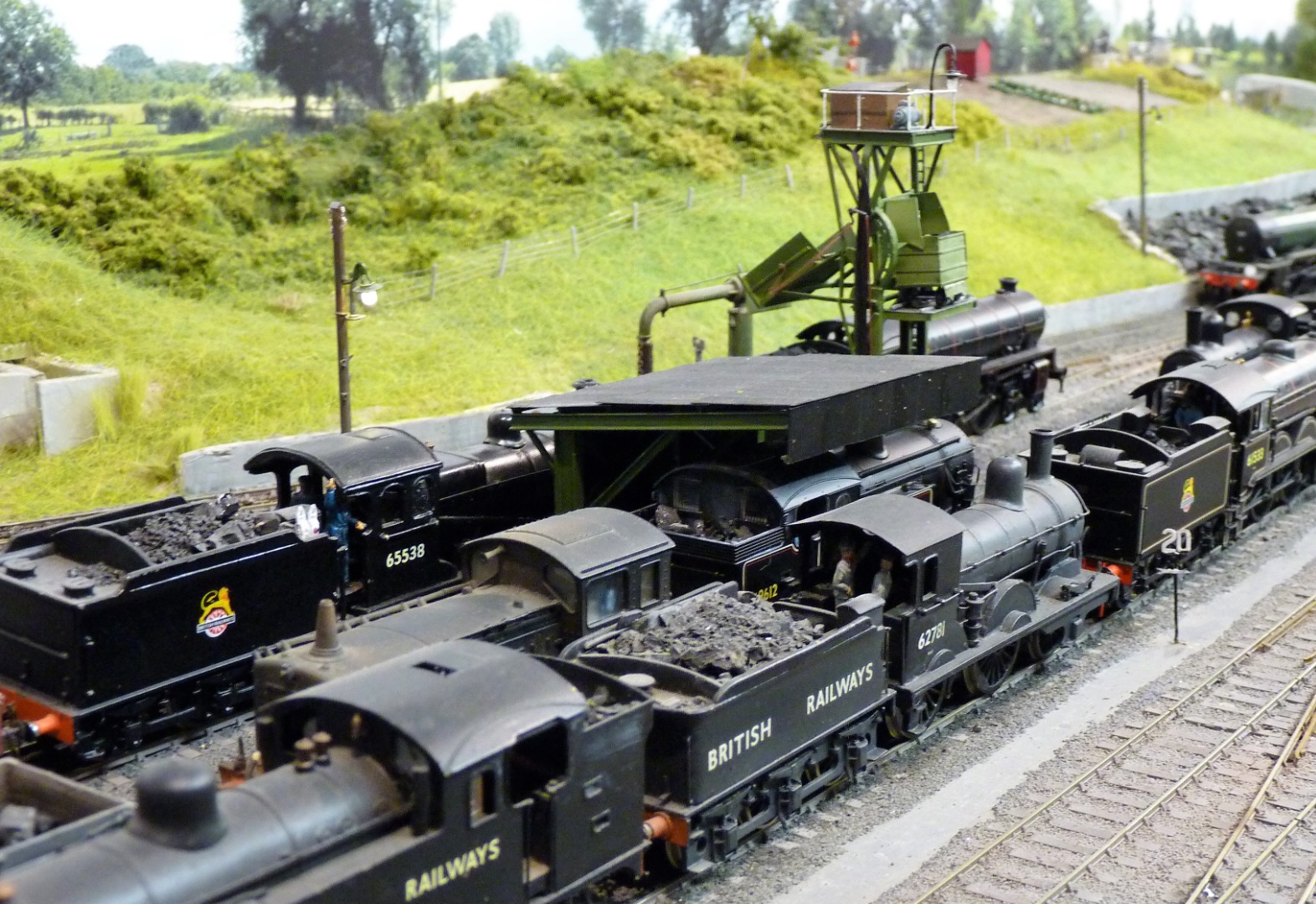
By 1955, the depot consisted of 65ft turntable, ash pits, Michell 1 ton tub elevator and coal-man’s shelter installed by the LNER in c1930, which replaced to some degree, the coal wharf adjacent to which, three and later four carriage bodies were placed by the LNER for staff facilities. On the extreme left can be seen the entrance to the World War Two air raid shelter.
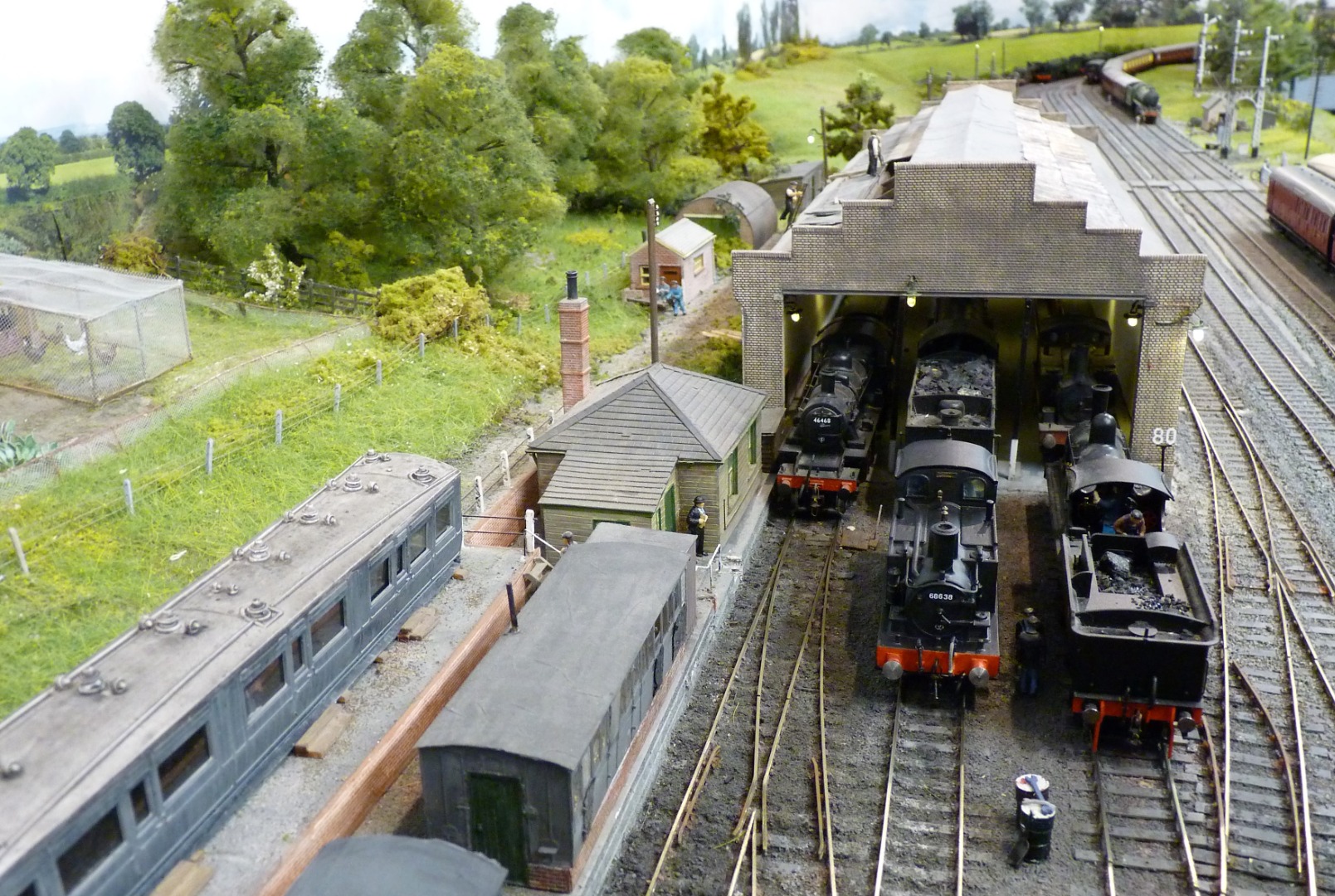
View looking east towards Ipswich. On the left are the carriage bodies for shed staff facilities and only appear to have been added in LNER days. Initially there were three ex GER carriages bodies until a London North Western 50ft bogie carriage body, originally transferred to the M&GN in the 1930s and withdrawn in 1952 was added. Various 4- and 6-wheel ex GER carriage bodies were used over the years, one was destroyed in 1952 and replaced with another ex GER vehicle.
Beyond the carriage bodies is the Shed Master’s and General Office, and beside the loco shed is the brick-built mess/toilet and beyond one of four bike stores at the depot. On old Ordnance Survey plans the land at the back of the carriage bodies is shown as “allotments”, and although I have not seen any photographs showing allotments in the 1950s, I have added them for interest, together with the World War Two concrete pillbox.
Beyond the loco shed is the low-lying land, formed by the brickworks and the area where the water softener sludge was dumped.
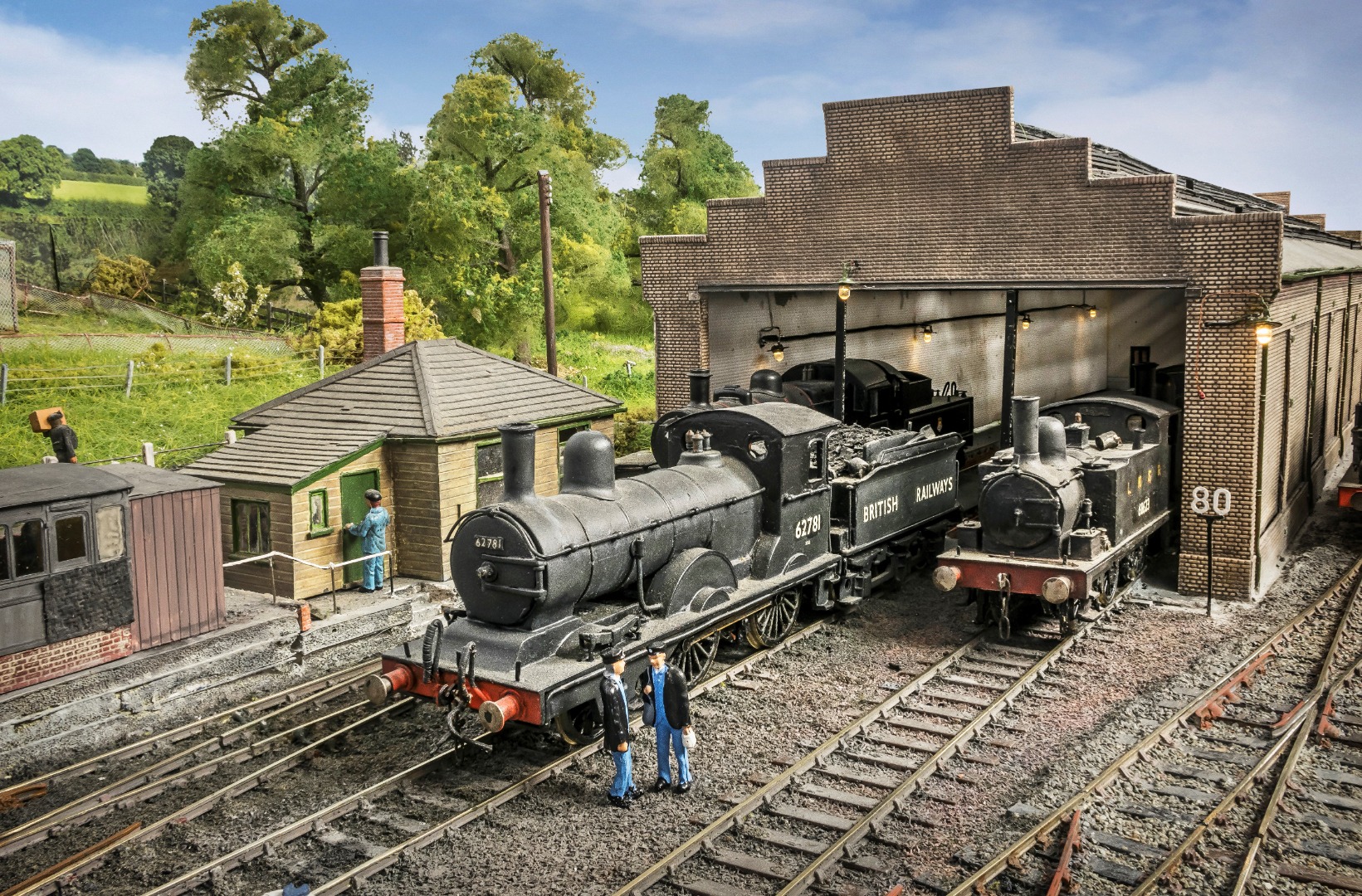
Class E4 2-4-0 62781, fitted with enclosed cab when working in the North East. The loco was allocated at various times to both Colchester and Cambridge sheds and frequently seen on Cambridge/Colchester services. Class J69 0-6-0T 68226 was one of those sent to Scotland and retained its GE cab and had shunters steps added. It returned to East Anglia in 1951, albeit not to Colchester and is another loco I built many years ago for another layout but cannot bring myself to rebuild!
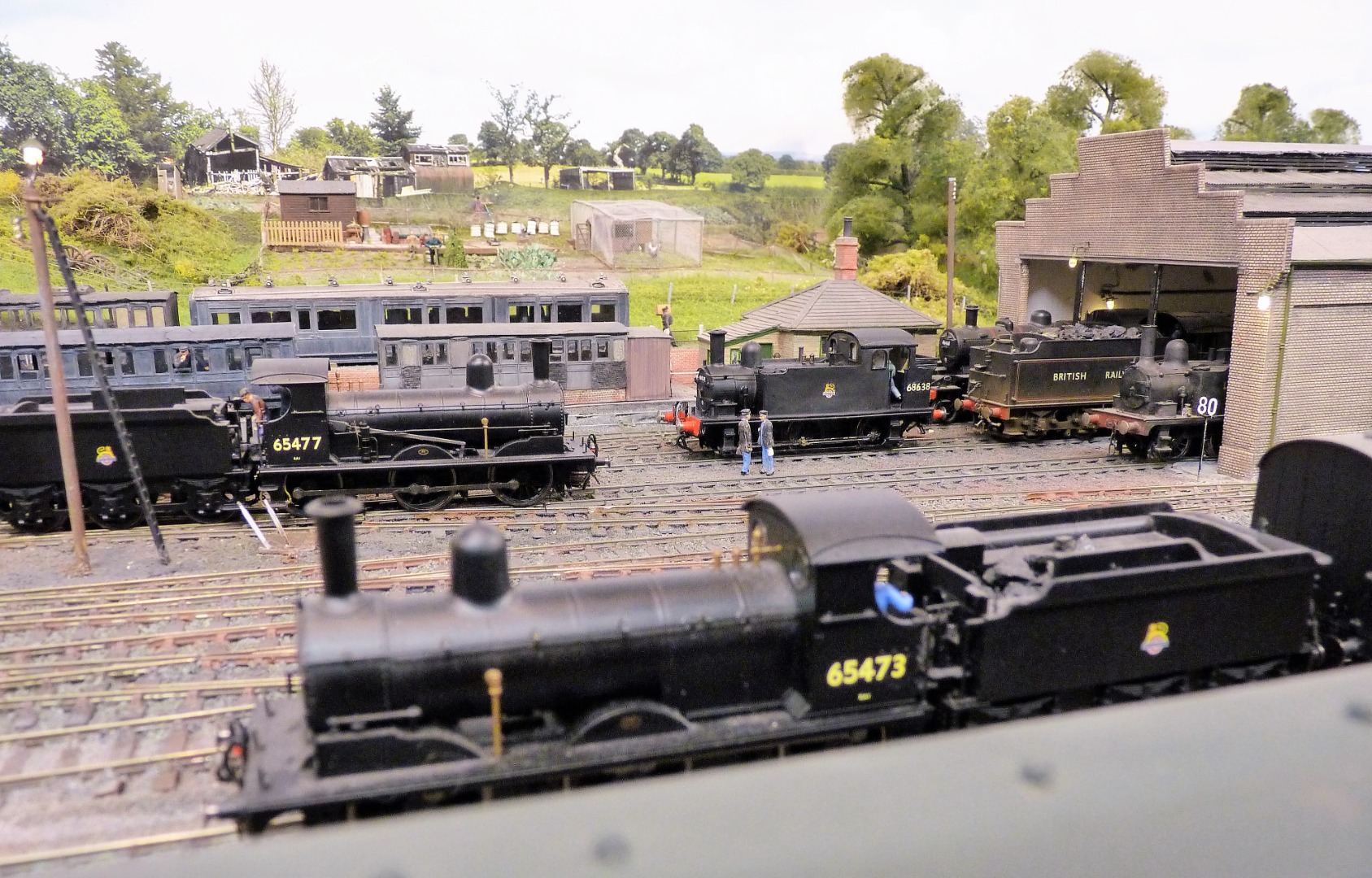
View taken from the road which ran parallel to the railway and at the back of the yet to be built signal box. Class J68 0-6-0T 68638 was a resident at Colchester from 1950 to 1956 and Class J15 0-6-0 65473 was also a long-term residents at Colchester. 65477 was allocated to Cambridge.
The loco depot was on an elongated site the Ipswich side of Colchester Station and was the site of the Eastern Union Railway station, carriage, and loco shed. The original EUR shed burnt down on 25th January 1850 and the single road shed which replaced it, was itself replaced in 1890 by the GER with a three-road shed, incorporating the original shed pits, which lasted until the shed closed on 2nd November 1959. The shed roof was replaced by the LNER shortly after Grouping, as the original had been burnt down in the winter of 1921/22.
At the Ipswich end of the shed was the stores building (being a two-storey building and unlike any EUR crossing keepers’ cottages, I would suggest this was the original EUR station building) and across Brick Kiln Road crossing was the 18ft x 38ft fitters shop built in 1920.
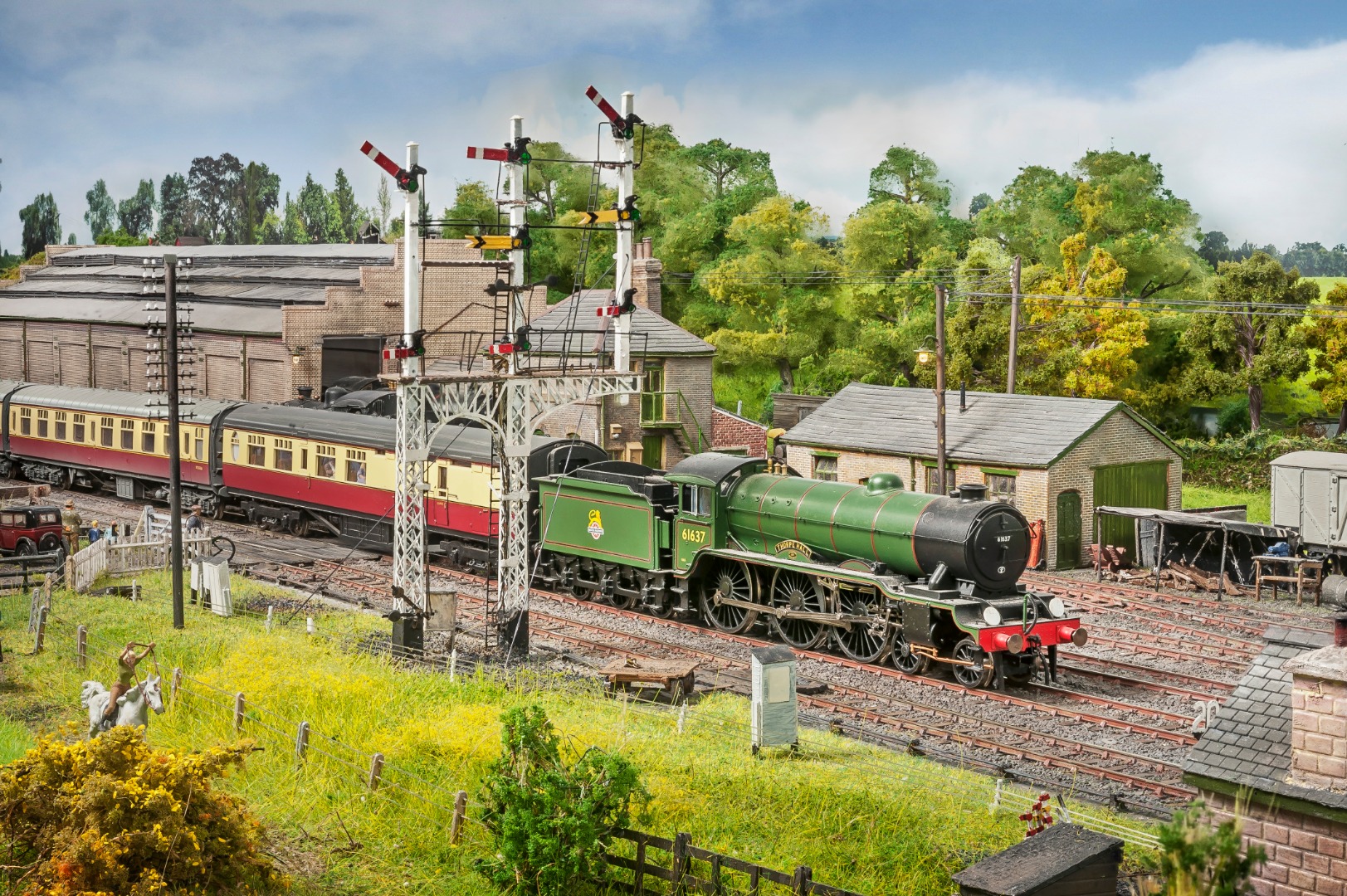
Train in view is the 5.40pm Liverpool Street to Clacton/Walton SET 299 hauled by B17 4-6-0 61637 Thorpe Hall and the train is formed of BSK (4), SK ( 8 )*, SK ( 8 )*, FK (6), RB, TSO *, CK (4-3) *, and BCK (2-3) * (* = BR Mk1). Note, just visible in front of p-hut is the fog repeater signals and p-way trolly on section of track.
Over the years I have collected a few British Railways Eastern Region (Great Eastern) Colchester Line Carriage Working diagrams and put together set trains as here. I've also made set freight workings such as the "infamous" Up Fish train behind a K2, one of the Bertram Mills Circus trains which regularly visited Colchester, and the locomotives also reflect those that would have been seen at Colchester in the 1948-1959 period.
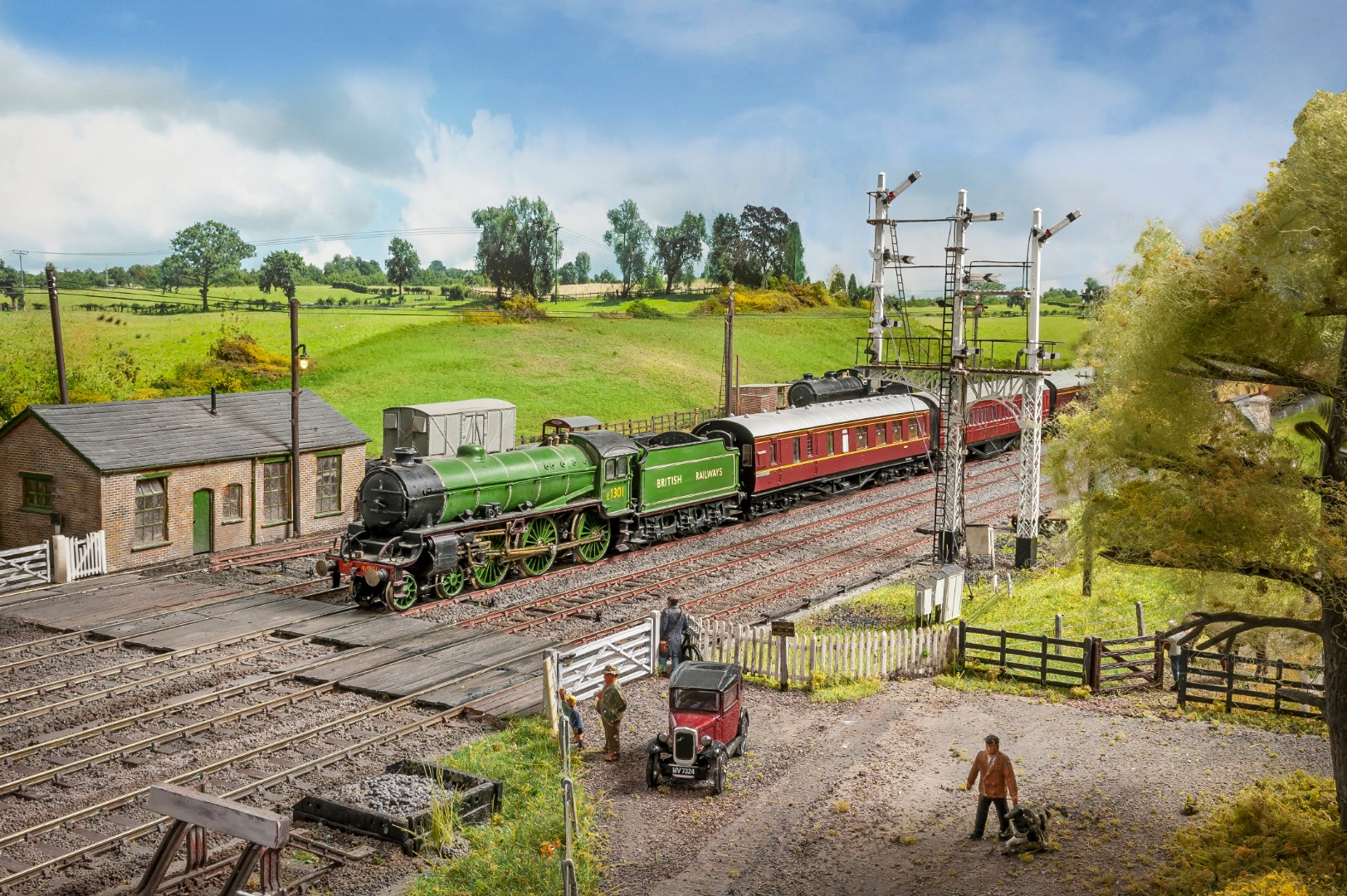
Class B1 4-6-0 E1301 of Cambridge shed on a return Midland’s holiday excursion formed of LMS stock, BTK, TK x 5no, and BTK.
The GER box van is sitting on the “crane road”, waiting for Oxford Rail’s Cowans Sheldon 15ton crane and for me to build the two GER carriages, and GER double-bolster crane runner wagon which formed the breakdown train!
The crossing is modelled from photographs and I would suggest the railway did not want it used by road vehicles, hence removing some of the planking. At a later date, the railway replaced the large gates with fencing.
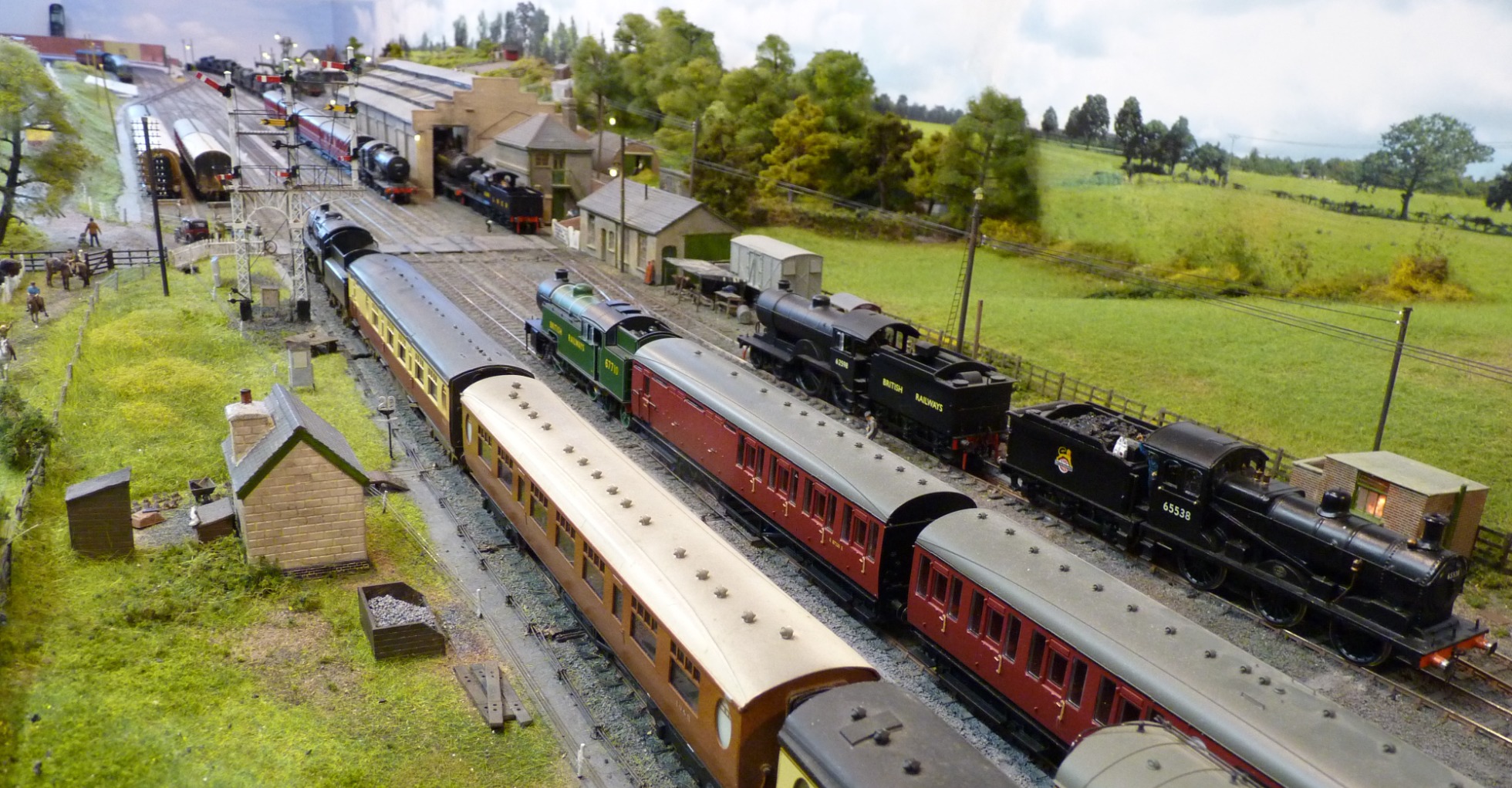
View looking west towards Colchester Station. At this end of the layout, I have added telegraph poles, point rodding, signal wire cable runs and is sort-of “finished”. Completing the details beyond the crossing was delayed, whilst I built the double track junction, and it has taken about two years to sort the crossover wiring!
Class L1 2-6-4T 67710 is working a return excursion set formed of Southend Victoria to London Liverpool Street LNER Thompson non-corridor stock of BT, CL, T x 4, CL and BT. BR 4MT 2-6-0 76030 is working a local Clacton service and on the down Norwich, a Colchester to Ipswich local train approaches.
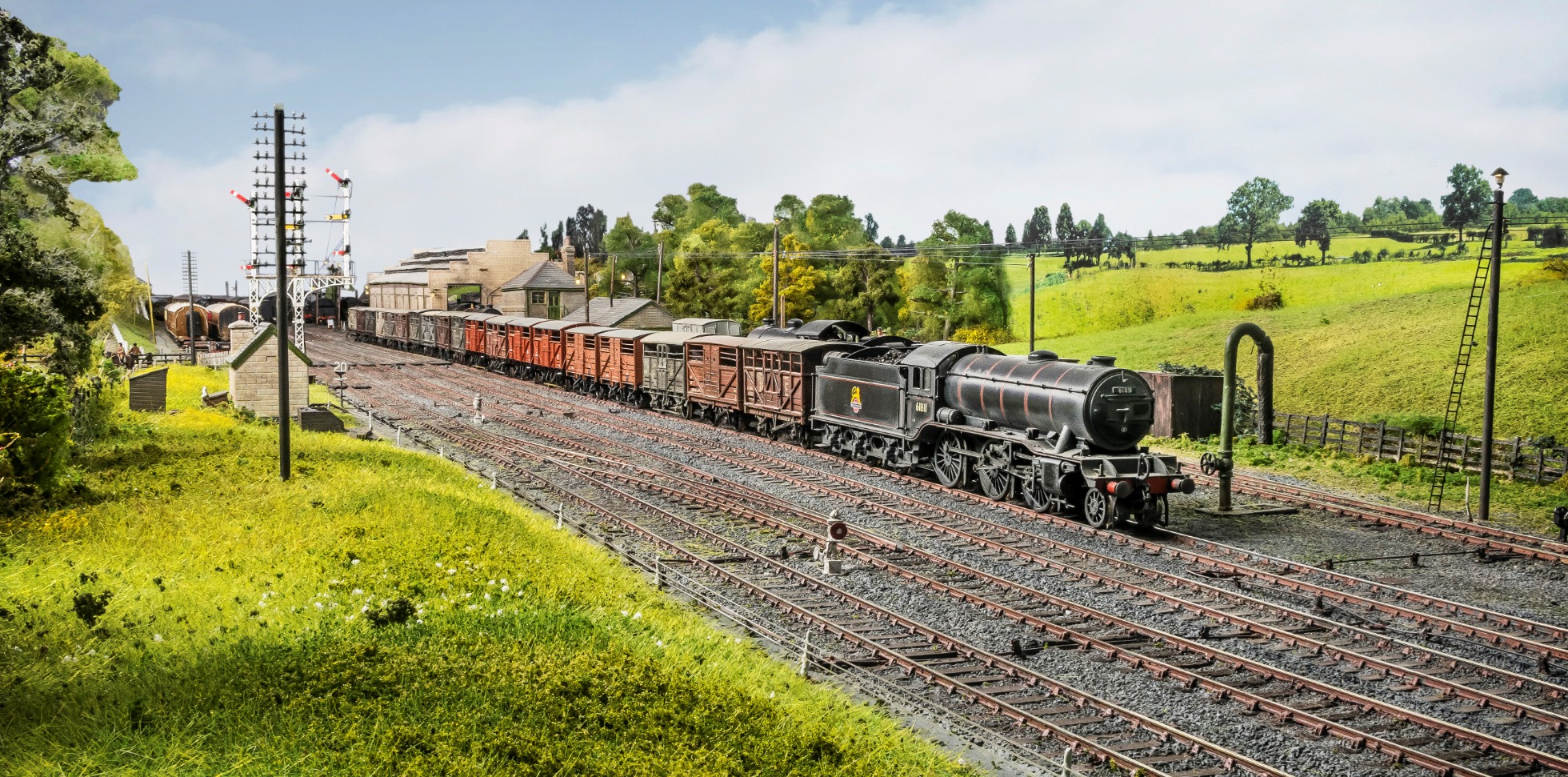
Class K3 2-6-0 61811 of March shed is working a down Norwich line cattle train. In the foreground the crossover was the last at the Ipswich end of Colchester to be signalled by GER ground disc (“Dodds”) signals.
The layout appeared in Model Rail magazine Summer issue 2019 and photographs 4, 7, 9, 10, & 12 were taken by Chris Nevard for the magazine.
I have wanted to build the layout for best part of 30 years, but work did not start until about ten years ago, albeit some of the locomotives and rolling stock date from previous layouts built 50 years ago and re-wheeled from EM to OO gauge. However, most of the work has been undertaken since retirement five years ago, but much is still to be done, including the Junction Signal Box, station canopies, the two signal gantries which were at the end of the Clacton bay platform, point rodding, ground signals, telegraph poles, etc etc – Oh and not forgetting building Colchester St Botolph’s Station over the storage sidings!
The first ten years of British Railways is my main interest and the rolling stock on the layout reflects this. However, research – which I enjoy as much as the modelling - soon showed how much the infrastructure changed at Colchester in that short ten-year period.
These changes included by 1953 increase from three to four carriage bodies for loco staff mess facilities, changes to overhead cables and ELPs by 1954, re-placement of the Clacton branch platform GER lower quadrant signal and new shed staff facilities by 1956, electrification of the Clacton branch by 1958 and major re-signalling by 1959.
I wanted to include the Colchester steam breakdown crane which was condemned in 1954, a kit of which was available from Dan Pinnock of D&S Models and a RTR model from Oxford Rail has been announced, so the infrastructure I’ve modelled roughly to scale, is the quarter mile of railway from the 51 ¾ MP at the end of the down platform to the 52MP by the pond, where the water softening plant sludge was deposited, including the entire loco depot as at c1955.
As with most things on this model of Colchester, this view has long passed into history.
The Eastern Counties Railway opened its station at Colchester on 29th March 1843 and in the earliest known photograph of the station, the Railway Tavern is in view, it became the Colchester Arms in 1963 and was demolished in 1972 to make way for a new roundabout. To the right of the public house is Station Garage and the “green” building is a covered water tank, which supplied water to the railway laundry, loco depot, and station.
Where the bus is parked was the original terminus of one leg of the tram system in Colchester, and the lighting column was an original tram overhead line pole.
Next to the water tank was an access road to the loco depot and to the right the railway stable block, often miss-identified. A similar, but handed and large building still exists at Dereham Station on the Mid-Norfolk Railway. Mike Senatore Society Architectural Co-ordinator, has undertaken a full survey of the Dereham stable block and from this information, produced drawings of Colchester stable bock for me.
This view is taken from the station looking east towards Ipswich. On the extreme left is the loco spur off the turntable, where a loco was always maintained in steam for emergencies.
Locomotives in view, include Class J72 0-6-0T 69012 which was allocated to Ipswich in the early 1950s. Beyond Class J19 0-6-0 64652, which was allocated to Colchester from 1951 to 1959, is Class F5 2-4-2T 67199 and allocated to Lowestoft in 1955. It is push-pull fitted and the excuse for it being at Colchester is it is on-route from Stratford Works. I built this locomotive in the 1970s for another layout and only the push-pull fitted engines of this class were fully lined out by British Railways, so I cannot bring myself to remove the lining and renumber to a Colchester based loco.
On the right is a p-way train, hauled by Ivatt 2F 2-6-2T 41200 lettered LMS and allocated to Ipswich in the summers of 1949 and 1950 for Aldeburgh branch duties. The loco was brought all the way from North Wales to work the branch after an incident when the branch J15 failed, and the relief J15 set fire to the golf course. Unfortunately, on the train were several British Railways Board Directors on route to play golf! The loco was not liked by loco crews because of high coal bunker, which had to be hand coaled at Aldeburgh.
Stratford based BR 4MT 2-6-0 76030 arriving at the Clacton bay platform at Colchester, having worked a local service. On the right are the two carriage sidings, where frequently Brightlingsea, Cambridge, and Harwich local trains were held.
By 1955, the depot consisted of 65ft turntable, ash pits, Michell 1 ton tub elevator and coal-man’s shelter installed by the LNER in c1930, which replaced to some degree, the coal wharf adjacent to which, three and later four carriage bodies were placed by the LNER for staff facilities. On the extreme left can be seen the entrance to the World War Two air raid shelter.
View looking east towards Ipswich. On the left are the carriage bodies for shed staff facilities and only appear to have been added in LNER days. Initially there were three ex GER carriages bodies until a London North Western 50ft bogie carriage body, originally transferred to the M&GN in the 1930s and withdrawn in 1952 was added. Various 4- and 6-wheel ex GER carriage bodies were used over the years, one was destroyed in 1952 and replaced with another ex GER vehicle.
Beyond the carriage bodies is the Shed Master’s and General Office, and beside the loco shed is the brick-built mess/toilet and beyond one of four bike stores at the depot. On old Ordnance Survey plans the land at the back of the carriage bodies is shown as “allotments”, and although I have not seen any photographs showing allotments in the 1950s, I have added them for interest, together with the World War Two concrete pillbox.
Beyond the loco shed is the low-lying land, formed by the brickworks and the area where the water softener sludge was dumped.
Class E4 2-4-0 62781, fitted with enclosed cab when working in the North East. The loco was allocated at various times to both Colchester and Cambridge sheds and frequently seen on Cambridge/Colchester services. Class J69 0-6-0T 68226 was one of those sent to Scotland and retained its GE cab and had shunters steps added. It returned to East Anglia in 1951, albeit not to Colchester and is another loco I built many years ago for another layout but cannot bring myself to rebuild!
View taken from the road which ran parallel to the railway and at the back of the yet to be built signal box. Class J68 0-6-0T 68638 was a resident at Colchester from 1950 to 1956 and Class J15 0-6-0 65473 was also a long-term residents at Colchester. 65477 was allocated to Cambridge.
The loco depot was on an elongated site the Ipswich side of Colchester Station and was the site of the Eastern Union Railway station, carriage, and loco shed. The original EUR shed burnt down on 25th January 1850 and the single road shed which replaced it, was itself replaced in 1890 by the GER with a three-road shed, incorporating the original shed pits, which lasted until the shed closed on 2nd November 1959. The shed roof was replaced by the LNER shortly after Grouping, as the original had been burnt down in the winter of 1921/22.
At the Ipswich end of the shed was the stores building (being a two-storey building and unlike any EUR crossing keepers’ cottages, I would suggest this was the original EUR station building) and across Brick Kiln Road crossing was the 18ft x 38ft fitters shop built in 1920.
Train in view is the 5.40pm Liverpool Street to Clacton/Walton SET 299 hauled by B17 4-6-0 61637 Thorpe Hall and the train is formed of BSK (4), SK ( 8 )*, SK ( 8 )*, FK (6), RB, TSO *, CK (4-3) *, and BCK (2-3) * (* = BR Mk1). Note, just visible in front of p-hut is the fog repeater signals and p-way trolly on section of track.
Over the years I have collected a few British Railways Eastern Region (Great Eastern) Colchester Line Carriage Working diagrams and put together set trains as here. I've also made set freight workings such as the "infamous" Up Fish train behind a K2, one of the Bertram Mills Circus trains which regularly visited Colchester, and the locomotives also reflect those that would have been seen at Colchester in the 1948-1959 period.
Class B1 4-6-0 E1301 of Cambridge shed on a return Midland’s holiday excursion formed of LMS stock, BTK, TK x 5no, and BTK.
The GER box van is sitting on the “crane road”, waiting for Oxford Rail’s Cowans Sheldon 15ton crane and for me to build the two GER carriages, and GER double-bolster crane runner wagon which formed the breakdown train!
The crossing is modelled from photographs and I would suggest the railway did not want it used by road vehicles, hence removing some of the planking. At a later date, the railway replaced the large gates with fencing.
View looking west towards Colchester Station. At this end of the layout, I have added telegraph poles, point rodding, signal wire cable runs and is sort-of “finished”. Completing the details beyond the crossing was delayed, whilst I built the double track junction, and it has taken about two years to sort the crossover wiring!
Class L1 2-6-4T 67710 is working a return excursion set formed of Southend Victoria to London Liverpool Street LNER Thompson non-corridor stock of BT, CL, T x 4, CL and BT. BR 4MT 2-6-0 76030 is working a local Clacton service and on the down Norwich, a Colchester to Ipswich local train approaches.
Class K3 2-6-0 61811 of March shed is working a down Norwich line cattle train. In the foreground the crossover was the last at the Ipswich end of Colchester to be signalled by GER ground disc (“Dodds”) signals.
The layout appeared in Model Rail magazine Summer issue 2019 and photographs 4, 7, 9, 10, & 12 were taken by Chris Nevard for the magazine.
Last edit: 4 years 11 months ago by Paul Goldsmith (paulg).
The following user(s) said Thank You: Paul Willis (Flymo748), Nigel Burbidge (Nigel57), Steven Duhig (SDuhig), Paul Godwin (Godders53), Alex Geller (alexandali), Alan Woodward (Alan23), Roger Jones (roga), David Marshall (david.t.marshall), Peter Thompson (pd.uplands@outlook.com), Brian Watson (BrianWatson1) and 1 other people also said thanks.
Please Log in or Create an account to join the conversation.
Time to create page: 0.256 seconds